When you’re not sure how to prune roses, it can feel a bit daunting, but I promise it doesn’t need to be. With a few simple rose‑care tips and a little practice, you’ll be pruning your roses with confidence and enjoying healthier plants and bigger, more beautiful blooms.

Roses really are one of the loveliest additions to any garden. We have quite a few in ours because they bring such gorgeous colour through spring and summer. Most of our rose bushes are planted close to the house, which means we can admire the blooms from inside all through the warmer months.
And of course, the fragrance is another reason I love keeping roses nearby. Many of ours are planted along the paths we walk every day, so it’s easy to lean in for a quick sniff and enjoy that classic rose perfume as we come and go.
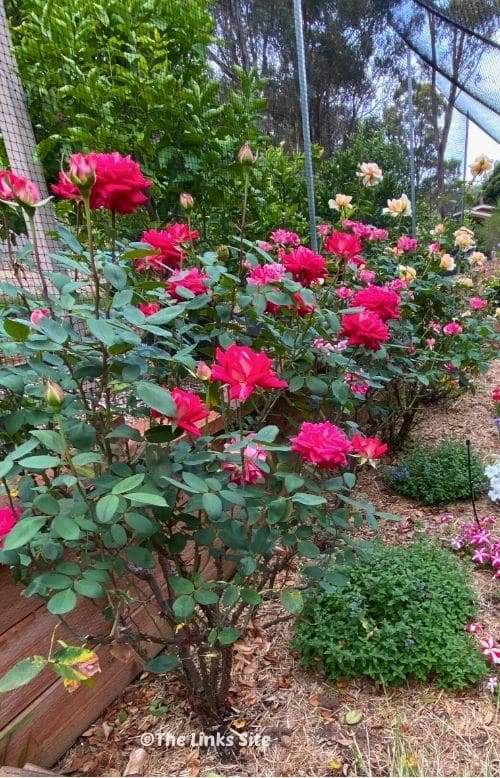
While the colour and scent are definite highlights, the one downside of having lots of roses is that they all need to be pruned! Pruning roses is essential for encouraging new growth, shaping the plant, and keeping it healthy. A well‑pruned rose bush rewards you with strong growth and plenty of blooms.
Learning how to prune roses sounds complicated, but it’s really not. I’ve been pruning ours for quite a few years now, and each year I get more confident. The more you experiment, the more you’ll learn how much each rose bush needs and what shape suits it best.
Why Pruning Roses Matters
Pruning roses isn’t just about tidying them up. It helps improve airflow, reduces the risk of pests and diseases, and encourages the plant to put its energy into producing fresh, healthy growth. If you want more flowers — and who doesn’t — pruning is the key.
If you do have an issue with pests on your roses, you may also find my post on Controlling Aphids on Roses helpful.
When to Prune Roses
Pruning roses generally happens at two main times of the year: late winter and summer.
Winter Pruning (Major Prune)
The winter prune is the big one. This is when dormant roses are cut back quite hard to prepare them for strong spring growth. I like to prune my roses in August (or February if you’re in the northern hemisphere). If you’re planning your seasonal garden tasks, you might also like my To Do List of Winter Gardening Jobs.
Summer Pruning (Light Trim and Deadheading)
Roses can also be pruned during the warmer months to encourage more blooms. This summer prune is much lighter and mostly involves deadheading old flowers and giving the plant a gentle trim. I find that the more consistently I deadhead, the more flowers we get — sometimes well into autumn.

Tools You Need for Pruning Roses
Before you start, make sure you have:
- Clean, sharp secateurs
- Gardening gloves (your hands will thank you)
- Optional: disinfectant spray for tools
Sharp, clean tools help you make neat cuts and prevent the spread of disease.

How to Prune Roses (Step by Step)
Step 1 — Prepare Your Tools
Clean and sharpen your secateurs before you begin.
Step 2 — Remove Inward Growing Branches
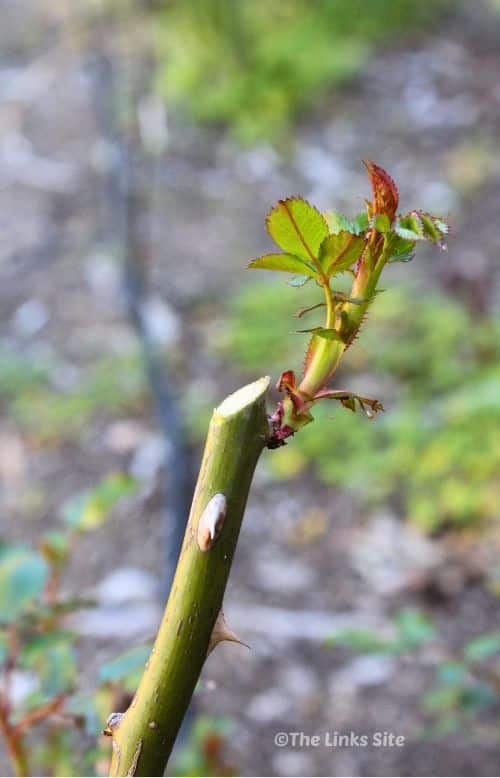
Start by opening up the centre of the plant. Remove any branches that cross over or grow inward. Make each cut on a slight angle so water runs off easily. This helps prevent moisture from sitting on the cut and causing rot.
Step 3 — Shape the Plant for Airflow and Light
Once the centre is clear, cut the remaining branches back to about half their height. Always prune to an outward‑facing bud so the new growth spreads away from the centre. Continue making angled cuts to keep moisture from sitting on the pruning wounds.
Winter Rose Pruning: A Closer Look
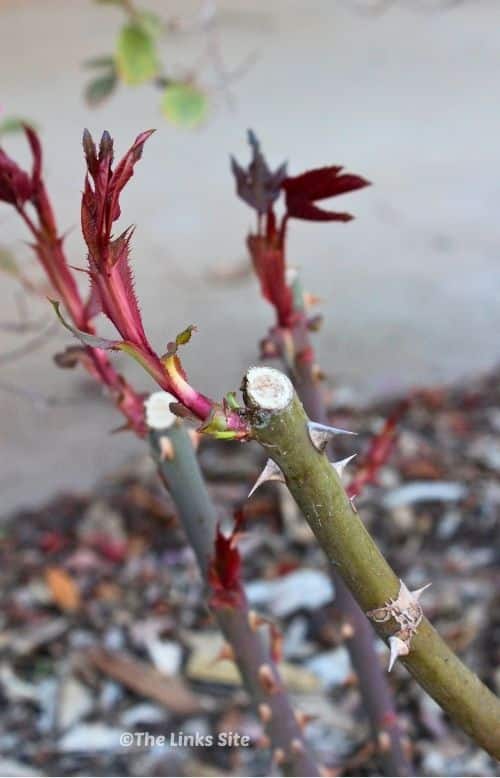
Winter pruning is when you can be a bit more assertive. Roses are dormant, so they handle a harder prune well. Focus on:
- Removing dead, damaged, or diseased wood
- Cutting back the plant to shape it
- Encouraging outward growth
This sets your rose up for a strong spring flush.
Summer Rose Pruning: Encouraging More Blooms
During summer, roses are actively growing, so all they need is a light prune. I usually cut mine back by about 20% in mid to late summer. This tidies the plant and encourages more flowers.
And don’t forget to keep deadheading throughout spring and summer. Removing spent blooms signals the plant to produce more.

Tips for Keeping Roses Blooming Longer
- Deadhead regularly
- Trim lightly during summer
- Cut fresh flowers to bring indoors (this counts as pruning!)
- Keep the plant open and airy
These simple habits can extend your flowering season well into autumn.

Final Thoughts on Pruning Roses
Pruning roses doesn’t need to feel intimidating. With a few simple techniques and a little practice, you’ll quickly learn what each plant needs and how to shape it for healthier growth and more abundant blooms. Whether you’re doing a major winter prune or a light summer tidy‑up, these small, consistent habits make a big difference to the way your roses look and perform.
The more you work with your roses, the more confident you’ll become — and before long, pruning will feel like a natural part of your gardening routine. With the right cuts at the right time, your roses will reward you with strong growth and beautiful flowers right through the season.
If you’d like help feeding your roses as well, you might enjoy my Beginner’s Guide to Fertilizing Roses.
Helpful Rose Pruning Videos
Here are a couple of videos I found that explain rose pruning really clearly:
Further Reading on Rose Pruning
If you’d like to learn more, I found this article very interesting:


 Hi, I'm Kaylene, and I'm a keen gardener,budding baker and wannabe DIYer!
Leave a Reply