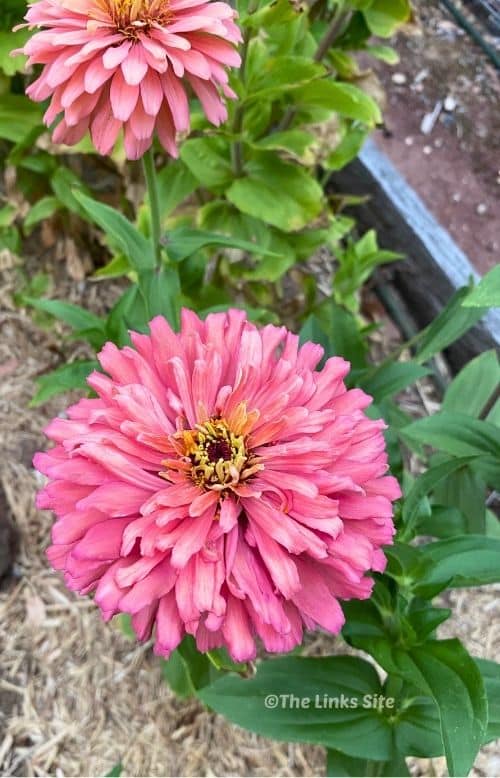
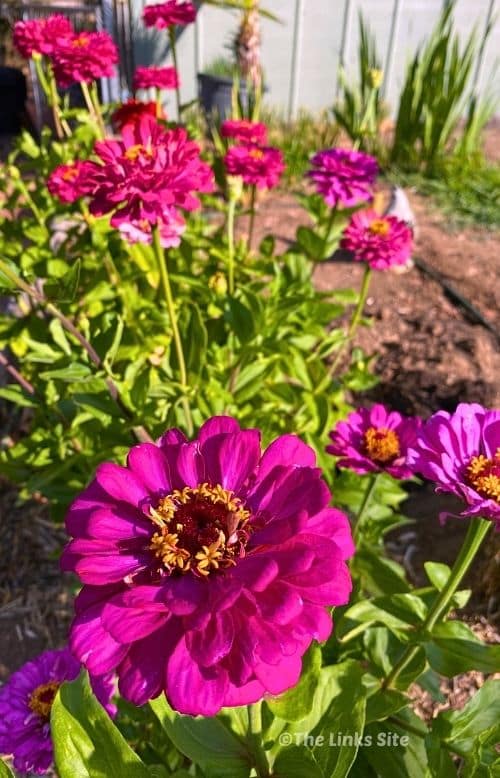
If you’re looking for a hardy, cheerful flower that thrives through the heat, you can’t go past zinnias. Growing zinnias is one of the easiest and most rewarding things you can do in the summer garden. Zinnias add such joyful colour to the garden. We get everything from rich reds and pretty pinks to burnt orange and all sorts of purples — and this year we’ve even had a pale yellow one appear out of nowhere! They’re wonderfully beginner‑friendly and will bloom their hearts out even when the temperature climbs over 40°C (104°F), as long as they’re kept watered.

Why Growing Zinnias Is Perfect for Beginners
Zinnias are tough, colourful, and incredibly forgiving. Many will even self‑seed, popping up again the following spring. They’re one of those plants that give you a lot of joy for very little effort.
Planting and Transplanting Zinnias
Growing Zinnias from Seed
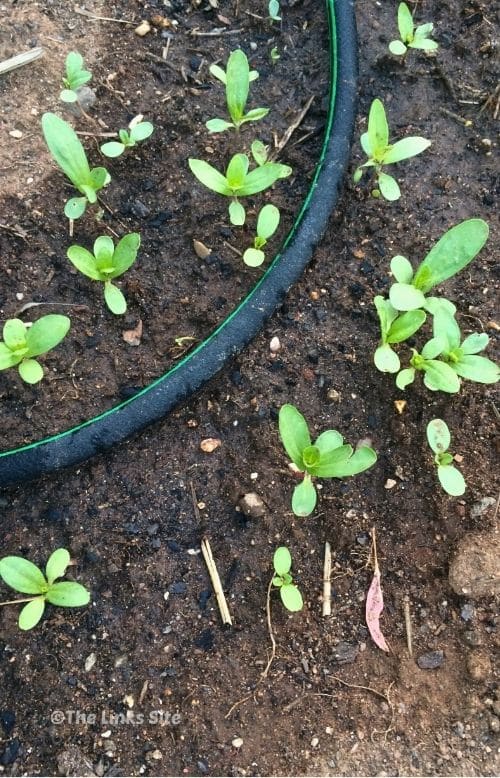
If you don’t have any self‑sown seedlings, zinnias are very easy to grow from seed. Prepare your garden bed, make a small hole about 1.5 cm (½ inch) deep, drop in a seed, backfill, and water well. Keep the soil moist and you’ll see seedlings in about 5–7 days.
Zinnias are sensitive to frost, so make sure you wait until after the last frost before planting your seeds or moving any self‑sown seedlings.
Tips for Transplanting Zinnias Successfully
Despite what I’ve read online, I find zinnias incredibly easy to transplant. They often pop up in places we don’t want them, so we simply move them to create a proper zinnia patch. They’re so forgiving — even if the soil falls away from the roots, they still survive.
Just make sure the new spot is ready with moist soil. Plant the roots deeply, backfill, firm the soil, and water well. I usually have a 100% success rate each year as long as I don’t damage the plant or roots.
Choose a sunny location with plenty of space. Zinnias grow 30–120 cm tall (1–4 feet) and about 30 cm (1 foot) wide, so give them room to shine. That being said, they don’t seem to mind being planted fairly close together, and the result is so beautiful when you have a dense patch of flowering zinnias!
Caring for Zinnias
Watering Zinnias
I grow my zinnias in the vegetable garden using drip irrigation. It delivers water straight to the root zone and helps prevent leaf issues like powdery mildew. Just make sure the soil drains well — zinnias don’t like sitting in soggy soil.
Deadheading Zinnias
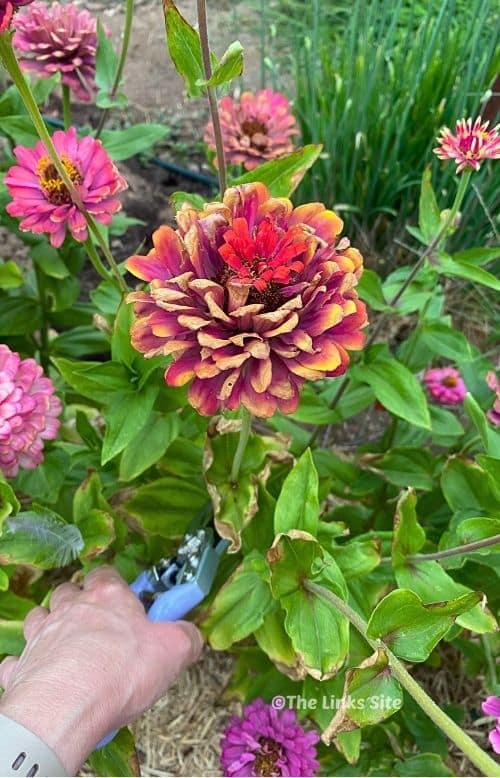
To keep the flowers coming, deadhead regularly. Snip off any blooms that are browning or past their best. I usually cut two or three sets of leaves below the flower to tidy the plant, but be careful not to remove any new buds forming lower on the stem.
Common Pests and Diseases
I’ve grown zinnias for years and rarely have pest or disease problems. Aphids can appear, but they’re easy to manage with natural methods like blasting with water, encouraging predators, or manual removal — just like I do with my roses.
If you have rabbits nibbling on the plants in your garden, zinnias are a great choice. I grow mine in a rabbit‑proof vegetable garden, but they’re generally considered rabbit‑resistant, especially once established. If you do have a rabbit problem, like I do, you might like this post where I share which plants they absolutely love to munch on in my garden (and which ones they don’t).
Benefits of Growing Zinnias
Zinnias are fantastic for attracting pollinators. Bees, butterflies, and especially the dainty swallowtail butterflies love them. They’re a great way to boost pollination in your vegetable garden.
Here’s a tiny snippet from my garden that shows just how much the bees adore the zinnias.
If you’d like more ideas for low‑care flowering plants that attract bees, you might enjoy my post: 8 Low Care Plants That Attract Bees.
Zinnias as Cut Flowers
Zinnias make wonderful cut flowers and last several days in a vase. Their bright colours and long stems make them perfect for cheerful summer arrangements. For more information and tips on keeping cut flowers fresh, this link is very helpful.
Frequently Asked Questions About Growing Zinnias
Zinnias usually germinate in 5–7 days and start flowering in about 6–8 weeks.
Yes. Zinnias thrive in heat and will keep blooming through very hot weather if watered regularly.
Absolutely. Zinnias transplant surprisingly well, even if some soil falls off the roots, as long as the new spot is moist and ready.
Zinnias grow best in full sun and need at least 6 hours of direct sunlight a day.
Keep the soil consistently moist but not soggy. Drip irrigation works especially well.
Yes. Zinnias are fantastic for pollinators, especially bees and swallowtail butterflies.
They’re excellent cut flowers and last several days in a vase when harvested at the right stage.
Zinnias are annuals, but they often self‑seed, so you may see new plants pop up the following spring.
Final Thoughts on Growing Zinnias
Zinnias really are one of the easiest and most rewarding flowers to grow. They’re hardy, colourful, beginner‑friendly, and brilliant for attracting pollinators. If you want a summer garden that bursts with colour, zinnias are a must‑grow.



 Hi, I'm Kaylene, and I'm a keen gardener,budding baker and wannabe DIYer!
Leave a Reply